
Is AI about to undermine your junior team's judgment and the quality of their work?
Some organizations are automating workflows with AI and unintentionally making a big mistake.
Here's how it happens: they automate a workflow, junior people stop doing the routine work that once built their judgment, a human review layer goes on top of the automated AI output, and everyone assumes the review covers the quality risk.
It doesn't. And the consequence isn't just a development problem. It's a quality problem.
Work that looks supervised will reach clients and stakeholders with errors that nobody in the chain had the judgment to catch.
So how do we build judgment in the age of AI?
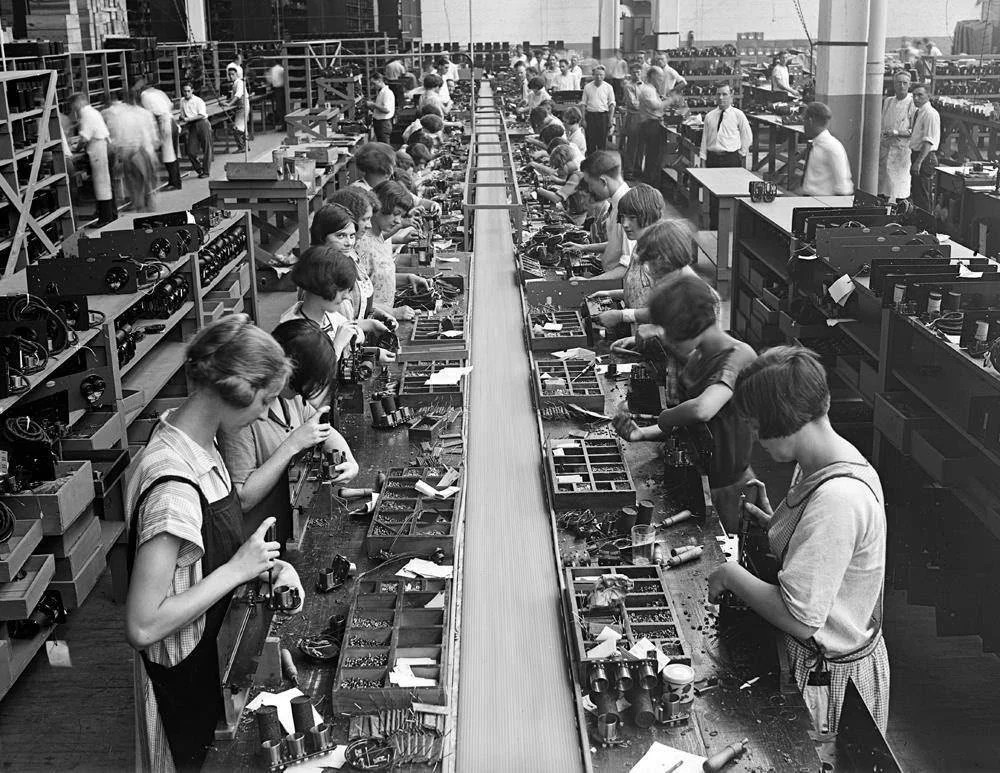
This isn't a new problem. A century ago, manufacturers automated production and replaced skilled craftspeople with assembly line workers. Production skyrocketed, and quality plummeted. Sound familiar? To fix it, organizations added quality inspectors at the end of the line. Defective goods still reached customers.
The lesson, hard-won over decades: you cannot inspect quality into a product. Quality must be built into the process and managed by people with judgment and expertise.
The same principle holds today. Automating knowledge work without developing human judgment is a quality disaster waiting to happen.
L&D leaders see it coming. So how do we solve for it?
Informal apprenticeship is breaking down
L&D leaders know how judgment develops. Through the work itself: the repetitions, the mistakes, the varied cases, accumulated over time. The junior person sitting near someone better, absorbing things that are never explicitly taught. How a senior paused over a number. The instinct that something was off before anyone could say why.
Some are calling this taste, or discernment. In professional contexts, we call it judgment. In audit, professional skepticism. In clinical work, clinical reasoning. The learning science is clear about what it is: a library of situations, comparisons, and hard-won failures, retrievable when a new situation triggers recognition of a familiar one.
It's not a personality trait. It's built. And the mechanism that builds it was already under pressure. Remote and hybrid work eroded the proximity that made informal apprenticeship occur naturally. AI is finishing what the pandemic started: not just removing the proximity but removing the work itself.
Building a practice environment is not the same as building judgment
This is where most organizations, and most current practice environments, fall short. Not because the intent is wrong, but because the design logic is incomplete.
Building a simulator is not the same as building judgment. Practice is necessary but not sufficient. What turns practice into judgment is something more specific, and most of what is being built right now is missing it.
Here is what the learning science says those conditions require.
-
One scenario practiced repeatedly builds competence with that scenario. To build transferable judgment, you need varied scenarios: different contexts, different conditions, different versions of the same underlying problem.
The research on analogical reasoning is unambiguous: pattern recognition develops through comparison across cases, not repetition within one. Vary the client, the conditions, the difficulty, the quality of the AI output learners are working with.
A junior professional who has practiced the same situation twelve times in the same context has not built the case library that expertise draws on. They have practiced one case twelve times.
-
We learn not when things go as planned, but when they don't. When our read turns out to be wrong. When the approach we were confident in produces an outcome, we didn't expect. Expectation failure is not a design flaw. It is the mechanism by which judgment forms. So, design for it deliberately: don't smooth the path to right answers, don't over-scaffold, don't let learners move through without genuine friction.
One of the most powerful exercises available right now: hand a learner a plausible but wrong AI output and ask them to find what's wrong with it.
You cannot teach someone to spot a bad answer by describing bad answers. They must encounter one, commit to a read, discover they were wrong, and understand why. That's judgment forming in real time.
-
Informal apprenticeship works because junior people are physically close to experts doing real work. What they absorb by proximity, the senior's pause, the question asked, the thing they looked at twice, was expert reasoning making itself visible without being articulated. You must replicate that deliberately now, in our increasingly virtual world. The annotated draft. The narrated decision. The senior who explains not just what they concluded but how they got there and what they almost missed.
This is harder than collecting content from subject-matter experts. It requires getting reasoning out of people's heads in the moment they are using it. But it is the raw material every good practice environment runs on. Don't build the simulator until you have the expert thinking to put inside it.
-
Early practice needs support. Scaffold it more heavily at the start. But then deliberately pull that support back as capability develops. Increase the difficulty. Remove the hints. Let the learner face the conditions of the real work, with the real cognitive demand that entails.
The progression from heavy scaffolding to targeted support to independent performance is not optional. It is how transfer happens. A learner who always has a safety net never finds out whether they can work without one.
-
AI creates a genuine opportunity here: the ability to capture what learners do in practice, the decisions they make, the things they miss, the patterns in where they struggle, and surface that for the coaches and managers who develop them. Use it.
Practice data that goes back to a human coach transforms the coaching conversation from a general check-in to a targeted, evidence-based discussion. The coach arrives knowing where the gaps are. The learner gets feedback that is specific to what they did. That is a more powerful development relationship than either the practice or the coaching alone.
Adopting intentional apprenticeship design
Many L&D leaders have been working to rebuild apprenticeship since the pandemic. The stakes have now been raised significantly. AI is accelerating the erosion of the informal learning that used to happen naturally, and the window for getting this right is narrowing.
The good news is that the science of learning is clear about what works. Judgment can be built intentionally, through varied practice, designed-in failure, captured expert reasoning, fading scaffolding, and coaching informed by real data. But it requires being deliberate about the design in a way that goes beyond adding a simulator or a review step.
It requires, in other words, engineering what informal apprenticeship used to deliver by accident.
The junior professionals entering your organization right now will be your seniors in five years. Whether they have the judgment to do that well is being determined today.
If you're ready to get intentional about building judgment in your organization, we'd welcome the conversation.
Want to design a learning experience that’s out of this world?
References
Bransford, J. D., Brown, A. L., & Cocking, R. R. (2000). How People Learn. Washington, DC: National Academy Press.
Brown, J. S., Collins, A., & Duguid, P. (1989). Situated cognition and the culture of learning. Educational Researcher, 18(1), 32–42.
Brynjolfsson, E., Li, D., & Raymond, L. (2025). Generative AI at Work.
Collins, A., Brown, J. S., & Newman, S. E. (1989). Cognitive apprenticeship: Teaching the crafts of reading, writing, and mathematics. In L. B. Resnick (Ed.), Knowing, Learning, and Instruction (pp. 453–494). Erlbaum.
Collins, A., & Kapur, M. (2014). Cognitive apprenticeship. In R. K. Sawyer (Ed.), The Cambridge Handbook of the Learning Sciences (2nd ed., pp. 109–127). Cambridge University Press.
Gick, M. L., & Holyoak, K. J. (1980). Analogical problem solving. Cognitive Psychology, 12(3), 306–355.
Kolodner, J. (1993). Case-Based Reasoning. San Mateo, CA: Morgan Kaufmann Publishers.
Schank, R. C. (1999). Dynamic Memory Revisited. New York: Cambridge University Press.
Schwartz, D. L., & Bransford, J. D. (1998). A time for telling. Cognition and Instruction, 16(4), 475–522.
